- Dermal Fillers for Hips
- Dermal Fillers for Temporal Area
- Dermal Fillers for Body Volume Restoration
- Dermal Fillers for Lips
- Dermal Fillers for Décolletage
- Dermal Fillers for Abdomen
- Dermal Fillers for Intimate Areas
- Dermal Fillers for Facial Contouring
- Dermal Fillers for Forehead
- Dermal Fillers for Face
- Dermal Fillers for Earlobes
- Fillers for nasolabial folds
- Dermal Fillers for Tear Trough
- Dermal Fillers for Periorbital Area
- Dermal Fillers for Chin
- Dermal Fillers for Hands
- Dermal Fillers for Cheeks
- Dermal Fillers for Body
- Dermal Fillers for Thin Lips
- Dermal Fillers for Neck
- Dermal Fillers for Buttocks
- Calcium Hydroxyapatite Fillers
- Poly-L-Lactic Acid Fillers
- Fillers for sagging skin
- Dermal Fillers for Periorbital Wrinkles
- Dermal Fillers for Cheek Wrinkles
- Dermal Fillers for Cheek Enhancement
- Dermal Fillers for Uneven Skin Tone
- Dermal Fillers for Dark Circles
- Dermal Fillers for Perioral Lines
- Dermal Fillers for Facial Ptosis
- Dermal Fillers for Glabellar Lines
- Dermal Fillers for Crow’s Feet
- Dermal Fillers for Forehead Lines
- Dermal Fillers for Chin Augmentation
- Dermal Fillers for Fine Lines
- Dermal Fillers for Acne Scars and Scarring
- Dermal Fillers for Neck Lines
- Dermal Fillers with Lidocaine



Anaesthetics: types, use and efficacy

Anaesthetics are substances used to eliminate or reduce pain. They are used in medicine, dentistry and cosmetology. Modern anaesthetic drugs are divided into two main groups: local anaesthetics and general anaesthetics.
Types of anaesthetics
1. local anaesthetics
These agents block the transmission of nerve impulses in a specific area of the body, providing pain relief. They are often used in dentistry, dermatology and minor surgical procedures .
Popular local anaesthetics:
- Lidocaine – widely used in medicine and cosmetology.
- Novocaine – used in surgery and dentistry.
- Bupivacaine is a longer duration of action.
2. General anesthetics
These drugs cause complete unconsciousness, which is necessary in complex surgical operations.
Common general anaesthetics:
- Propofol is a fast-acting drug for anaesthesia.
- Sevoflurane is a gaseous anaesthetic used in inhalation anaesthesia.
- Ketamine – has a strong analgesic and sedative effect.
Use of anaesthetics
Anaesthetics are used in a variety of medical applications:
- Dentistry – for painless tooth extraction and caries treatment.
- Cosmetology – for laser procedures, injections and other manipulations.
- Surgery – to provide comfortable anaesthesia and post-operative pain relief.
Anaesthetics in cosmetology
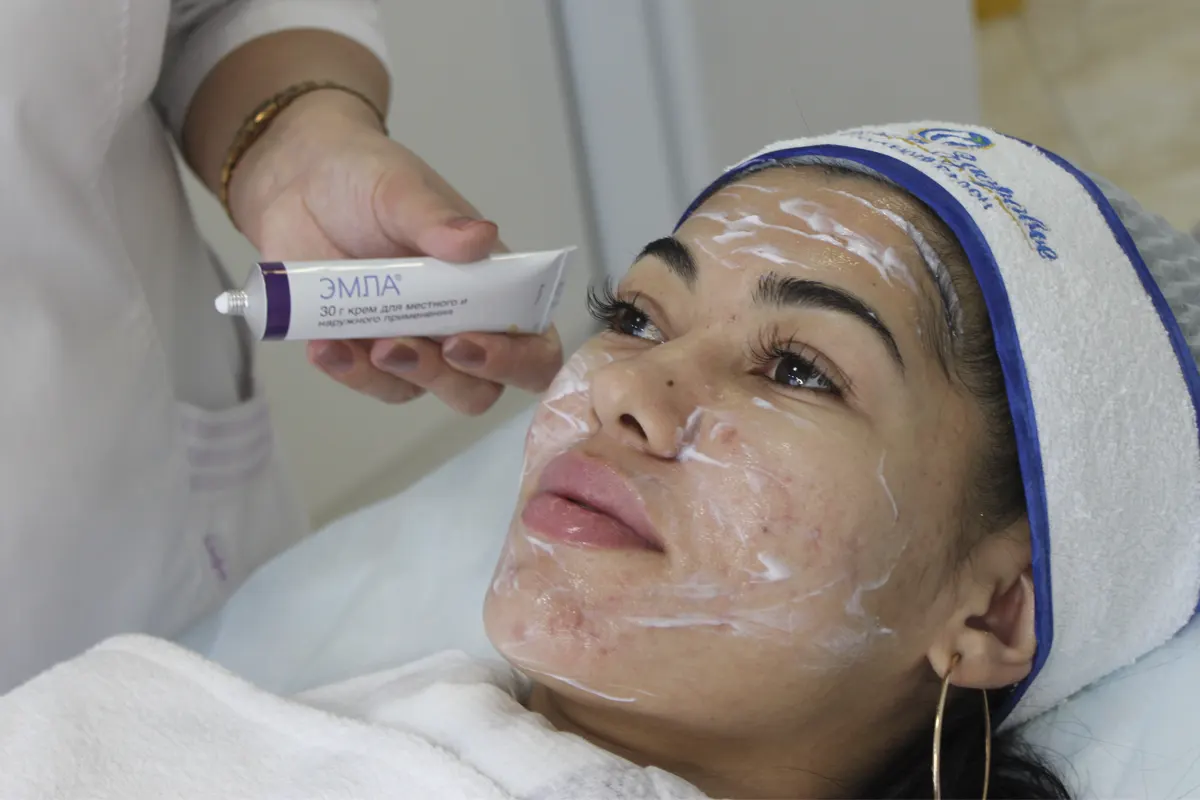
In cosmetology, anaesthetics are used to minimise pain during various procedures. Among them:
- Laser hair removal – use of local anaesthetics to reduce discomfort.
- Injection procedures – Botox, fillers, mesotherapy.
- Peels and laser resurfacing – application of anaesthetic creams before deep procedures.
The most common local anaesthetics in cosmetology are lidocaine, prilocaine and their combinations. They are applied to the skin in the form of creams or gels, providing temporary anaesthesia.
Efficacy and safety of anaesthetics
Modern painkillers are safe when used correctly but can cause side effects. It is important to consider the dosage, possible allergic reactions and contraindications.
Side effects of anaesthetics:
- Dizziness, nausea.
- Allergic reactions
- Decreased blood pressure
Before administering anaesthesia, it is important to consult a doctor and inform about possible contraindications.
Conclusion
Anaesthetics play a key role in medicine, providing comfort to patients during procedures. The variety of painkillers allows you to choose the best option for each case. The main thing is competent application and control by a specialist.